For UK enquiries please visit polymax.co.uk or contact us on 01420 474123 | Email sales@polymax.co.uk
22 208 4400
zł PLN
zł złoty polski (PLN)
Change currency:
  • £ funt szterling (GBP)
  • € euro (EUR)
  • Rs rupia indyjska (INR)
  • US$ dolar amerykański  (USD)

biuro@polymaxpolska.pl
Nie masz produktów w koszyku.
0
Koszyk

Polymax Blog

  • How to Specify and Select the Right Anti Vibration Mounts


    Anti vibration mounts, also known as AV mounts or vibration isolators, are rubber or elastomeric components used to absorb and dampen mechanical vibrations and shocks. They help prevent damage, reduce noise, and improve operator comfort in various mechanical systems. Whether you are working in industrial automation, HVAC systems, automotive applications, or marine environments, choosing the correct anti vibration mount can significantly extend the lifespan of your equipment and enhance overall performance.

    Before beginning the selection process, it is important to clearly understand the specific objectives you want to achieve with the anti vibration mount, whether that’s reducing noise, protecting sensitive equipment, minimising shock loads, or improving operator comfort. This understanding will guide your choices and help you specify the most effective mount for your application.

    To ensure optimum performance, it’s essential to know the criteria for specifying and selecting anti vibration mounts, how often they should be inspected, and when they should be replaced.

    Criteria for Specifying Anti Vibration Mounts

    When selecting anti vibration mounts, consider the following criteria carefully:

    1. Load Requirements

    Each mount is designed to support a specific static and dynamic load. Overloading can cause premature failure, while under-loading may reduce isolation effectiveness. Consider the following:

    • Determine the equipment weight.
    • Distribute weight evenly across mounts.
    • Factor in dynamic forces (e.g., from motors or compressors).

    2. Vibration Frequency

    Vibration frequency is one of the most important factors when selecting an anti vibration mount. It refers to how quickly a machine vibrates and is typically measured in Hertz (Hz), or cycles per second.

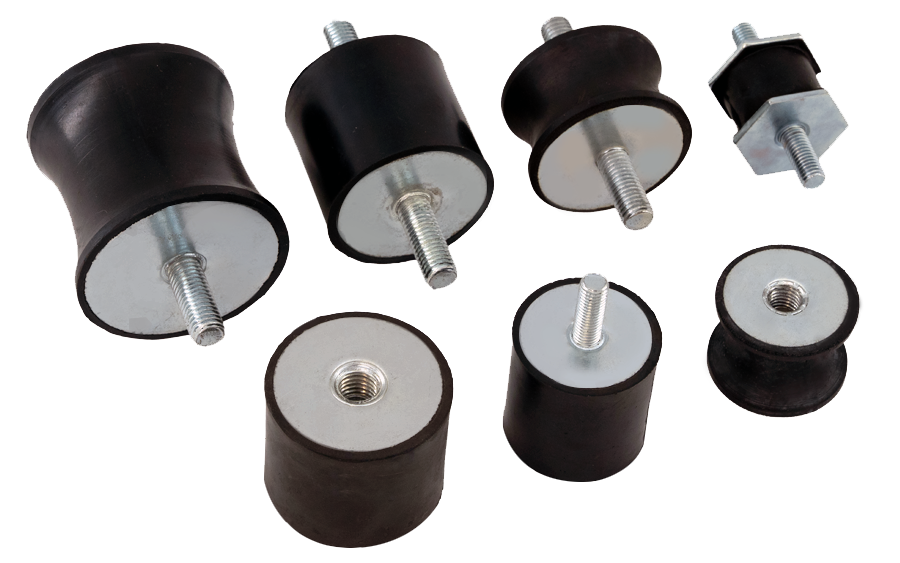
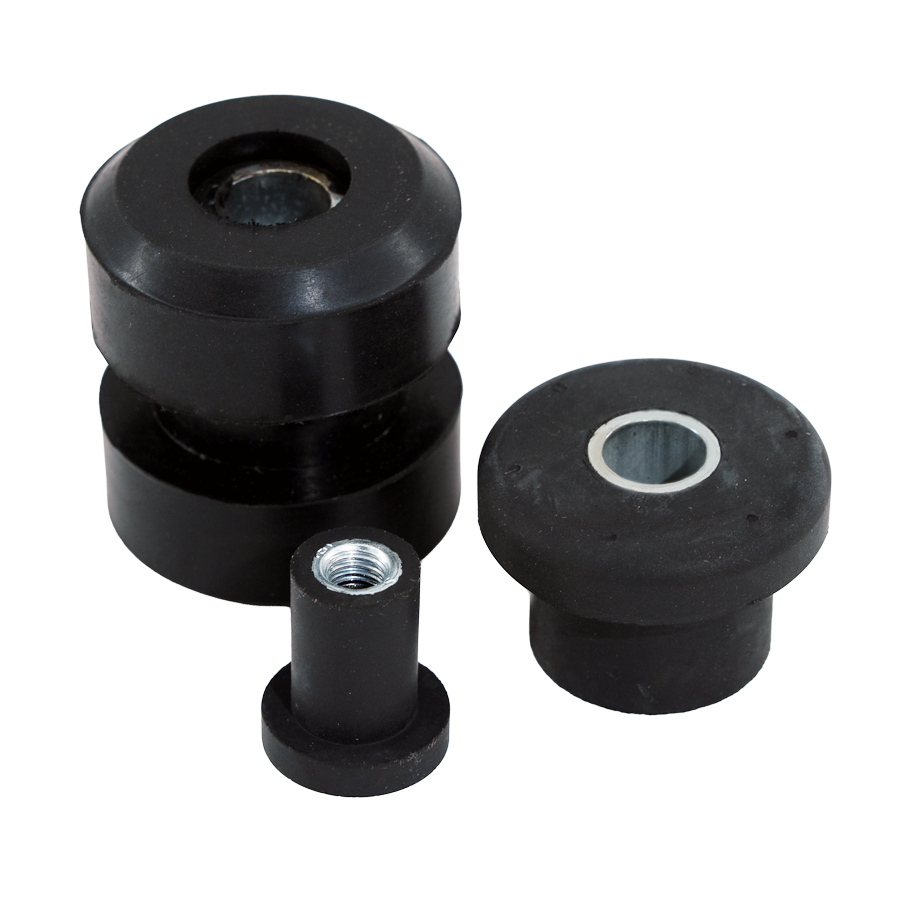
    Every piece of rotating equipment generates vibration at a specific frequency based on its operating speed. For example:Centre Bonded Bush Anti-Vibration Mounts
    • A motor running at 1,800 RPM produces a vibration frequency of 30 Hz.
    • A compressor operating at 3,600 RPM produces a vibration frequency of 60 Hz.

    To convert RPM to Hertz, use the following formula:

    Frequency (Hz) = RPM ÷ 60

    For anti vibration mounts to isolate vibration effectively, their natural frequency must be significantly lower than the vibration frequency of the equipment. This creates an isolation zone where vibration energy is absorbed rather than transmitted to surrounding structures.

    If the equipment's vibration frequency is too close to the mount's natural frequency, resonance can occur. Resonance amplifies vibration, increasing noise levels, accelerating component wear, and potentially causing equipment damage.

    As a general rule, the operating vibration frequency should be at least 1.4 to 2 times greater than the mount's natural frequency to achieve effective vibration isolation.

    When selecting a mount, also consider the relationship between load and stiffness:

    • Stiffer mounts have a higher natural frequency and provide less vibration isolation.
    • Softer mounts generally offer better vibration isolation but may allow greater movement.
    • Heavier loads compress mounts further, reducing their natural frequency and improving low-frequency isolation.

    For optimum performance, always select a mount that supports the equipment load while maintaining a natural frequency well below the machine's operating frequency.

    2.1 Understanding Static Deflection

    Static deflection is the amount a mount compresses under a given static load. It is one of the most critical parameters for determining the natural frequency of a mount and, therefore, its vibration isolation performance. In general, the greater the static deflection, the lower the mount’s natural frequency and the better its ability to isolate low-frequency vibrations.

    As a rule of thumb:

    • Higher static deflection = better isolation, but may allow more movement or sway.
    • Lower static deflection = stiffer support, better for high-frequency or precise applications.
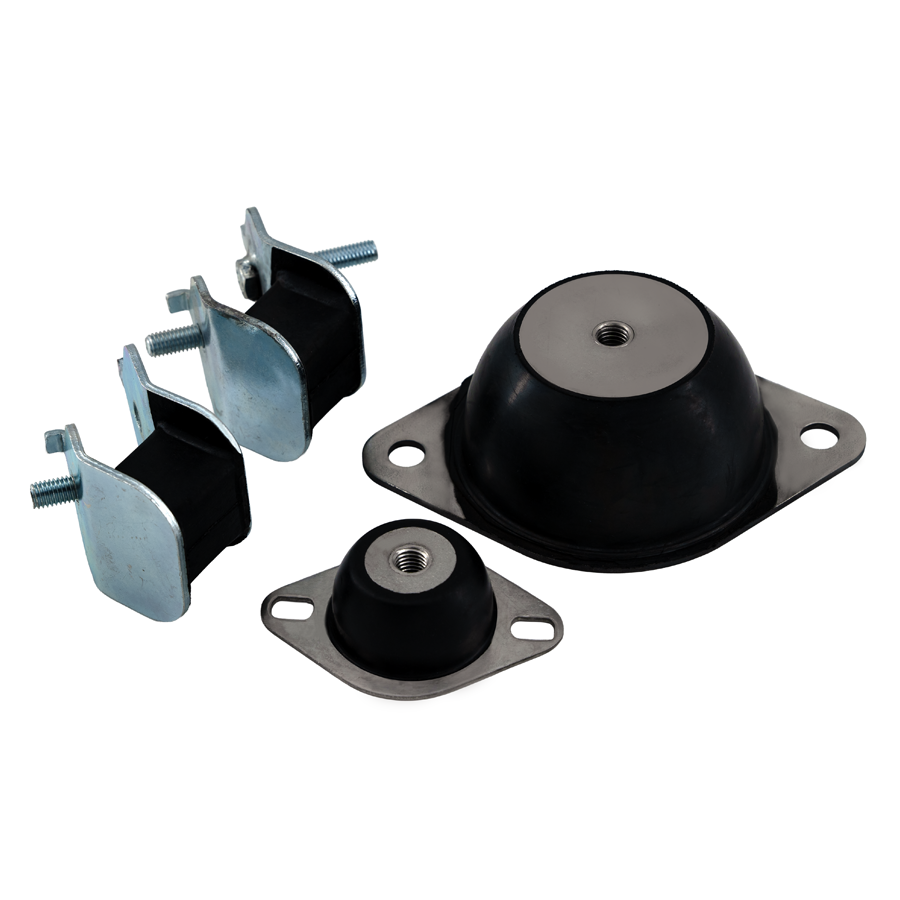
    Polymax provide static deflection data (e.g., mm per kg or inches per pound), which helps you compare mounts and ensure their deflection fits your equipment’s isolation and stability requirements.

    When selecting a mount:

    • Estimate the deflection based on your equipment’s weight.
    • Check that the deflection is within the optimal operating range of the mount.
    • Avoid over-compressing (which can bottom out the mount) or under-loading (which reduces vibration damping).

    3. Environmental Conditions

    The working environment can affect the longevity and performance of mounts. Consider:

    • Temperature ranges.
    • Exposure to oil, chemicals, UV, or moisture.
    • Outdoor vs. indoor use.

    Select materials like neoprene, EPDM, or natural rubber depending on these factors.

    4. Mount Orientation and Movement

    Mount orientation refers to the direction and type of forces the anti vibration mount must handle typically axial (vertical), radial (horizontal), or multi-directional loads. It is essential to choose a mount that is specifically designed to withstand the dominant direction of force in your application.

    Mount Type Typical Features / Use Axial Loads (Vertical) Radial Loads (Horizontal) Multi-Directional Loads Typical Applications
    Bobbin Mounts Compact, simple, cost-effective ★★★★★ ★★☆☆☆ ★☆☆☆☆ Motors, pumps, fans, light machinery
    Anti-Vibration Pads Levelling, shock isolation, low profile ★★★☆☆ ★★☆☆☆ ★★☆☆☆ HVAC units, enclosures, cabinets
    Shear Compression Mounts High load capacity, excellent stability ★★★★☆ ★★★★☆ ★★★☆☆ Compressors, engines, industrial machinery
    Machinery Feet Levelling and vibration isolation ★★★★☆ ★★★☆☆ ★★☆☆☆ Machine tools, presses, heavy equipment
    High Deflection Mounts Low-frequency vibration isolation ★★★☆☆ ★★★☆☆ ★★★★☆ Sensitive equipment, test rigs
    Buffers and Stops Impact absorption, end-of-travel protection ★★★★★ ★☆☆☆☆ ★☆☆☆☆ Doors, conveyors, cranes
    Generator Mounts Designed for gensets and power units ★★★★☆ ★★★☆☆ ★★★☆☆ Generators, alternators
    Cylindrical Bushes Simple, durable radial compliance ★☆☆☆☆ ★★★★☆ ★★☆☆☆ Linkages, pivots, control arms
    Centre Bonded Bush Metal bonded, high shear strength ★★★☆☆ ★★★★☆ ★★★☆☆ Automotive and industrial linkages
    Vehicle Suspension Mounts Road shock and vibration isolation ★★★☆☆ ★★★☆☆ ★★★★☆ Cars, trucks, off-road vehicles
    Marine Mounts Corrosion resistant, high isolation ★★★★☆ ★★★★☆ ★★★★★ Marine engines, gearboxes, vessels
    Sandwich Mounts Strong, stable, good shear resistance ★★★★☆ ★★★★★ ★★★☆☆ HVAC, pumps, compressors
    Cone Transit Mounts Shock absorption, transport protection ★★★★☆ ★★★★☆ ★★★★★ Marine, military, rail, generators


    Incorrect orientation can lead to premature failure, poor vibration damping, or even damage to connected machinery, so always match the mount’s design to the load direction for optimal performance and longevity.

    Consider the direction of forces:

    • Axial (vertical loads)
    • Radial (horizontal loads)
    • Multi-directional motion

    5. Durability and Life Expectancy

    Choose mounts rated for long-term performance and resistance to fatigue. 

    How Often Should Anti Vibration Mounts Be Checked?

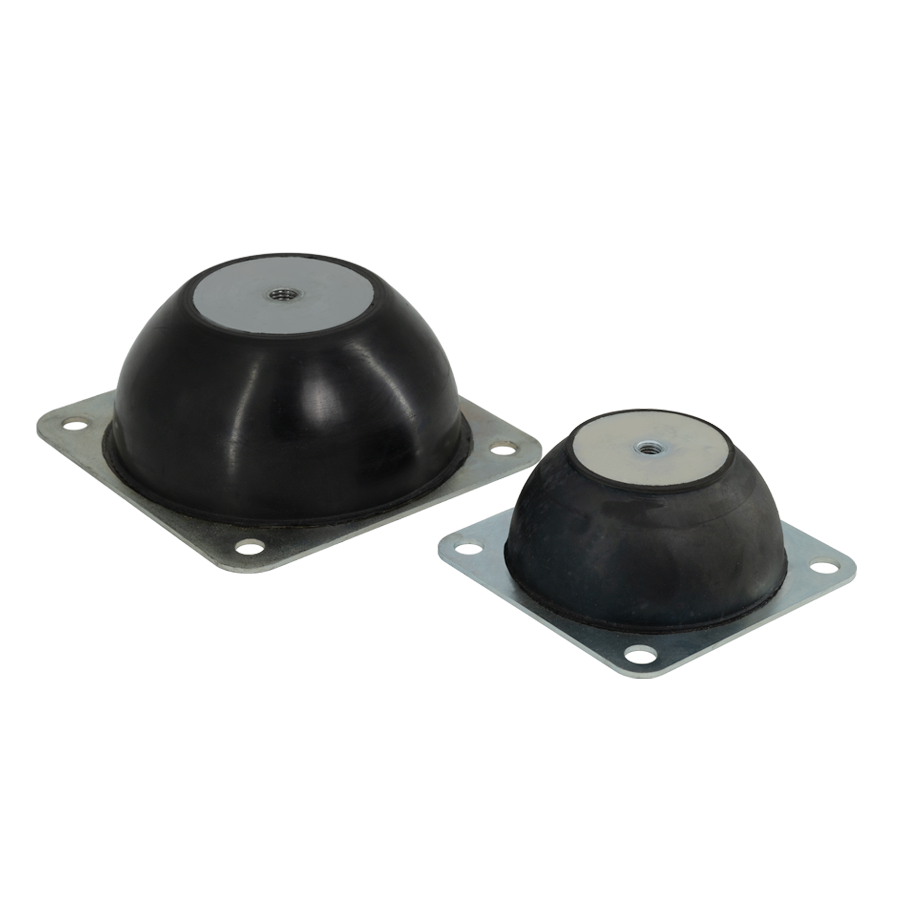
    To ensure a long operating life and maintain optimal vibration isolation, regular inspections are critical. We recommend the following inspection frequencies:Anti-Vibration Mount
    • Every 6–12 months for standard industrial applications.
    • Quarterly inspections in high-vibration or mission-critical environments.
    • After any major equipment movement, repair, or shock event.

    What to check during inspections:

    • Cracks, splits, or hardening in rubber components.
    • Loosening of mounts or hardware.
    • Excessive compression or deformation.
    • Rust or corrosion on metal parts.

    When Should Anti Vibration Mounts Be Replaced?

    Even the best anti vibration mounts degrade over time. Common signs that mounts need to be replaced include:

    • Loss of vibration isolation.
    • Increased noise or rattling.
    • Visible wear or deterioration.
    • Mounts have reached their expected service life (usually 3–7 years, depending on application and material).

    Always replace mounts in sets to maintain balance and even load distribution.

    Selecting the correct anti vibration mount is essential for reducing noise, controlling vibration, protecting equipment, and extending service life. By carefully considering load requirements, vibration frequency, static deflection, environmental conditions, and mounting orientation, you can ensure reliable performance and effective vibration isolation.

    Regular inspection and maintenance are equally important. Monitoring mounts for signs of wear, deformation, corrosion, or loss of isolation performance can help prevent costly downtime and unexpected equipment failures.

    For expert advice and product recommendations tailored to your needs, contact our team of experts on +44 (0) 1420 474 123 or E-mail us. 
  • Oil, Gas, Offshore & Subsea O-Ring Standards Explained: NORSOK M-710, M-711, AED/RGD & NACE MR0175

    In the oil, gas, offshore, and subsea industries, O-rings may be small components, but they perform a critical role in maintaining the integrity of high-value equipment. These elastomer seals operate in some of the world's harshest environments, where they are exposed to extreme and fluctuating pressures, wide temperature ranges, aggressive hydrocarbons, chemical injection fluids, and sour gas containing hydrogen sulphide (H₂S).

    Failure of a single O-ring can lead to loss of containment, unplanned downtime, environmental incidents, costly repairs, and serious safety risks. As a result, operators and equipment manufacturers rely on internationally recognised standards and material qualification programmes to ensure sealing reliability throughout the life of an asset.

    Understanding offshore O-ring standards and certification requirements is essential for engineers, procurement professionals, maintenance teams, and project managers responsible for specifying sealing solutions in demanding oil and gas applications.

    Why O-Ring Certification Matters in Offshore and Subsea Environments

    Offshore and subsea equipment places significant demands on elastomer materials. Certified O-rings provide confidence that the seal material has been tested and qualified to perform under the conditions it will encounter in service.

    Using qualified sealing materials helps ensure:

    • Reliable sealing under high pressures and challenging temperatures
    • Resistance to sour gas (H₂S), hydrocarbons, and aggressive chemicals
    • Compliance with operator, project, and regulatory requirements
    • Consistent manufacturing quality and material traceability
    • Reduced maintenance costs and lower lifecycle risk

    Ensuring you use certified O-rings is a risk management strategy, not just a regulatory requirement.

    NORSOK Standards: M-710 & M-711 for Offshore Elastomers

    Developed by the Norwegian petroleum industry, NORSOK standards were created to improve safety, reliability, and cost efficiency across the Norwegian Continental Shelf. Today, NORSOK standards are widely specified throughout global offshore and subsea projects and are often regarded as the benchmark for elastomer qualification.

    While NORSOK compliance is not legally required outside Norway, many operators and equipment manufacturers specify NORSOK-qualified materials as part of their technical requirements. In practice, this can make compliance essential for participation in offshore projects worldwide.

    It is important to understand that NORSOK standards qualify elastomer compounds rather than individual O-rings. To maintain compliance, manufacturers must produce seals using approved formulations, controlled manufacturing processes, and full batch traceability.

    Key Points:

    • NORSOK is not legally required outside Norway, but operators often treat it as mandatory.
    • NORSOK standards focus on compound qualification, not individual O-rings.
    • Approved elastomer compounds must be manufactured with controlled processes and full traceability to maintain compliance.

    Scope of NORSOK Elastomer Standards


    Standard Primary Focus Relevance to O-Rings
    M-710 Qualification testing of non-metallic sealing materials Defines thermal ageing, chemical resistance, and RGD testing
    M-711 Material requirements for elastomers Sets property limits, mechanical performance, and manufacturing traceability


    NORSOK M-710 remains one of the most widely specified qualification standards for elastomer materials used in offshore and subsea sealing applications, particularly where long-term reliability is critical.

    Global Use of Offshore Elastomer Standards

    While NORSOK standards originated in Norway, offshore operators worldwide often specify a combination of NORSOK, NACE, API, and ISO requirements depending on project location and operating conditions.

    Region Commonly Specified Standards Why It Matters
    Norway / North Sea NORSOK M-710 / M-711, NACE MR0175 Often contractually mandatory for offshore projects
    UK North Sea NORSOK, NACE MR0175, ISO Ensures equipment acceptance by multiple operators
    Middle East NACE MR0175, operator-specific Focus on sour service and chemical resistance
    Gulf of Mexico NACE MR0175, API, ISO Meets regulatory and operator requirements
    Asia-Pacific Offshore NORSOK (subsea), ISO, NACE Demonstrates offshore reliability for subsea projects

    Understanding which standards apply to a project is a crucial part of selecting suitable offshore O-rings and sealing materials.

    AED & RGD Testing for High-Pressure Elastomers

    One of the most important considerations for offshore and subsea elastomers is resistance to rapid gas decompression (RGD), sometimes referred to as explosive decompression.

    When an elastomer is exposed to high-pressure gas, molecules can permeate into the material. If pressure is released too quickly, the trapped gas expands faster than it can escape, causing internal cracking, blistering, or catastrophic seal damage.

    Term Description
    AED (Anti-Explosive Decompression) Ability of elastomer to resist damage from rapid decompression under high pressure
    RGD (Rapid Gas Decompression) Physical phenomenon tested to evaluate elastomer resistance to explosive decompression

    AED/RGD resistance is particularly important in:

    • High-pressure valves
    • Subsea connectors
    • Production manifolds
    • Gas compressors
    • Blowout preventers (BOPs)
    • Downhole completion tools

    Because pressure cycling is unavoidable in these applications, AED/RGD-qualified O-rings are often considered essential for long-term reliability.

    NACE MR0175 / ISO 15156 for Sour Service

    Hydrogen sulphide (H₂S) presents one of the most aggressive environments encountered in oil and gas production. Exposure to sour gas can accelerate elastomer degradation, resulting in swelling, embrittlement, cracking, and premature seal failure.

    NACE MR0175, published jointly with ISO 15156, provides internationally recognised guidance for material selection in H₂S-containing environments. Compliance helps ensure sealing materials maintain their performance and integrity throughout service life.

    Typical Applications Requiring NACE Compliance

    While NORSOK focuses on overall offshore elastomer qualification, NACE MR0175 specifically addresses material performance in sour service environments.

    Application Type NACE MR0175 Requirement Why This Matters
    Sour Gas Production Mandatory Prevents H₂S-induced seal failure
    Sour Oil Production Mandatory Ensures long-term integrity
    Gas Processing Mandatory Maintains chemical compatibility
    Sweet Service Not Required Standard elastomers acceptable


    O-Ring Material Selection and Certification

    Selecting the correct O-ring material involves far more than choosing a polymer family. Performance depends on the complete compound formulation, including fillers, curing systems, and manufacturing controls.

    As a result, generic material descriptions alone are insufficient when specifying O-rings for offshore, subsea, or sour service applications.

     Common Elastomer Materials and Typical Suitability

    Material NORSOK AED / RGD NACE MR0175 Typical Use Notes
    NBR Limited Poor No Non-sour oil service Only specific grades suitable
    HNBR Yes Good Yes Oil & gas, sour service Widely used in high-pressure sour applications
    FKM (Viton®) Yes (special grades) Good Yes High-temp hydrocarbons Select compound grades only
    EPDM Limited Poor No Water / steam systems Not suitable for hydrocarbons or sour gas
    FFKM Yes Excellent Yes Extreme chemicals & temperature Often used in critical subsea applications


    For demanding offshore applications, HNBR, FKM, and FFKM compounds are among the most frequently specified materials due to their ability to satisfy multiple qualification requirements simultaneously.

    Choosing the Right O-Rings

    When specifying O-rings for offshore, subsea, and sour service environments, it is important to evaluate both the application conditions and the certification requirements.

    Before selecting a sealing material, consider:

    • Required standards and project specifications, including NORSOK M-710, M-711, NACE MR0175, and ISO 15156
    • Operating pressures and temperature ranges
    • Exposure to hydrocarbons, production chemicals, and sour gas
    • AED/RGD resistance requirements
    • Material certification and traceability documentation
    • Long-term reliability and maintenance considerations

    Selecting the correct offshore O-ring requires more than matching material types. Certification status, pressure profile, temperature range, chemical exposure, and sour service requirements all influence sealing performance and operational reliability.

    Our technical team can help identify compliant NORSOK, AED/RGD-resistant, and NACE-compliant O-ring solutions for your application. Contact us on +44 (0) 1420 474 123 or email us for expert technical guidance.

  • How to Choose the Right Cable and Hose Protectors


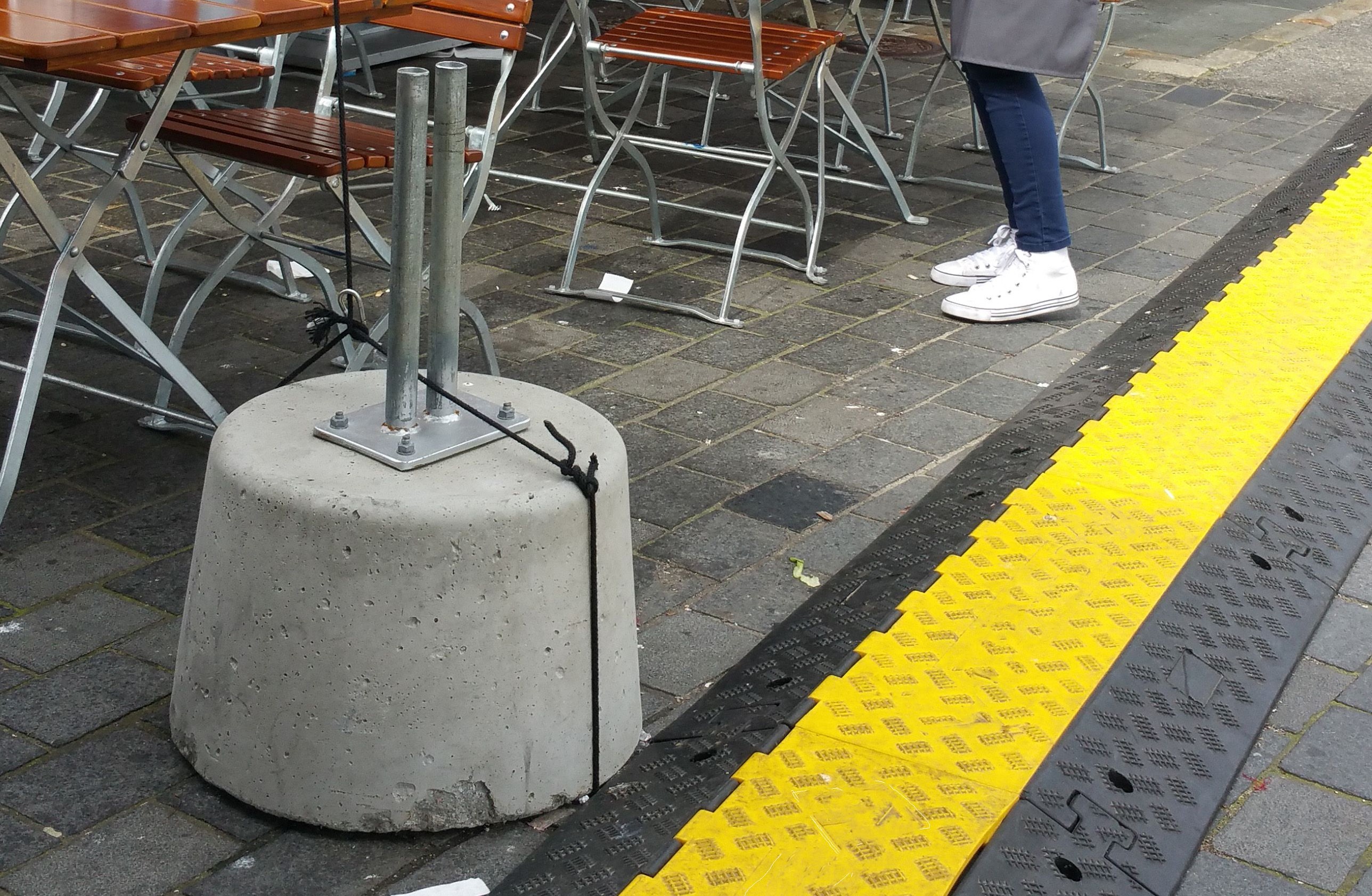
    Protecting people should always be the first priority, whether in a warehouse, on a construction site or at a temporary event. Exposed cables and hoses can quickly become trip hazards, putting employees, contractors and members of the public at risk of injury. In areas where vehicles operate, unprotected cables can also become damaged, leading to equipment failure, costly downtime and additional safety concerns. 

    Choosing the right cable or hose protector is therefore about far more than protecting cables, it is about creating safer environments, reducing risk and ensuring the smooth operation on your site.

    Why Are Cable and Hose Protectors Important?

    Slips, trips and falls remain one of the most common causes of workplace injuries across the UK. Cables and hoses running across walkways, access routes and vehicle routes present a significant risk if they are not properly managed.

    A suitable cable protector can help:

    • Protect people from slip and trip hazards
    • Protect power cables and hoses from damage
    • Improve site safety and housekeeping
    • Maintain safe access routes
    • Reduce downtime and costly repairs
    • Ensure compliance with health and safety requirements

    For temporary installations such as festivals, exhibitions, sporting events and outdoor events, cable protectors also help create safe public spaces where large numbers of people may be moving around unfamiliar environments.

    Understanding Your Legal Responsibilities

    Employers and site managers have a legal duty to assess and control workplace risks.

    Relevant legislation and guidance may include:

    Failure to adequately manage cables and hoses can result in accidents, enforcement action, claims, project delays and reputational damage.

    Step 1: Consider the Environment

    The first question to ask is where the cable protector will be used.

    Environment Typical Applications Key Requirements
    Indoor Offices, warehouses, schools, exhibition halls and retail environments Low-profile covers that minimise trip hazards and allow safe pedestrian access
    Outdoor Construction sites, infrastructure projects, festivals and public events Weather resistance, durability, UV protection and suitability for uneven ground. Must withstand rain, mud, temperature fluctuations and, where necessary, heavy vehicle traffic.


    Step 2: Understand the Traffic Crossing the Protector

    One of the most important factors when choosing a cable protector is determining what will pass over it. Selecting an underspecified protector can lead to structural failure, resulting in the load being directly applied to the live cables or pressurised hoses and creating serious safety risks.

    Traffic Type Typical Applications Recommended Solution Typical Load Requirement
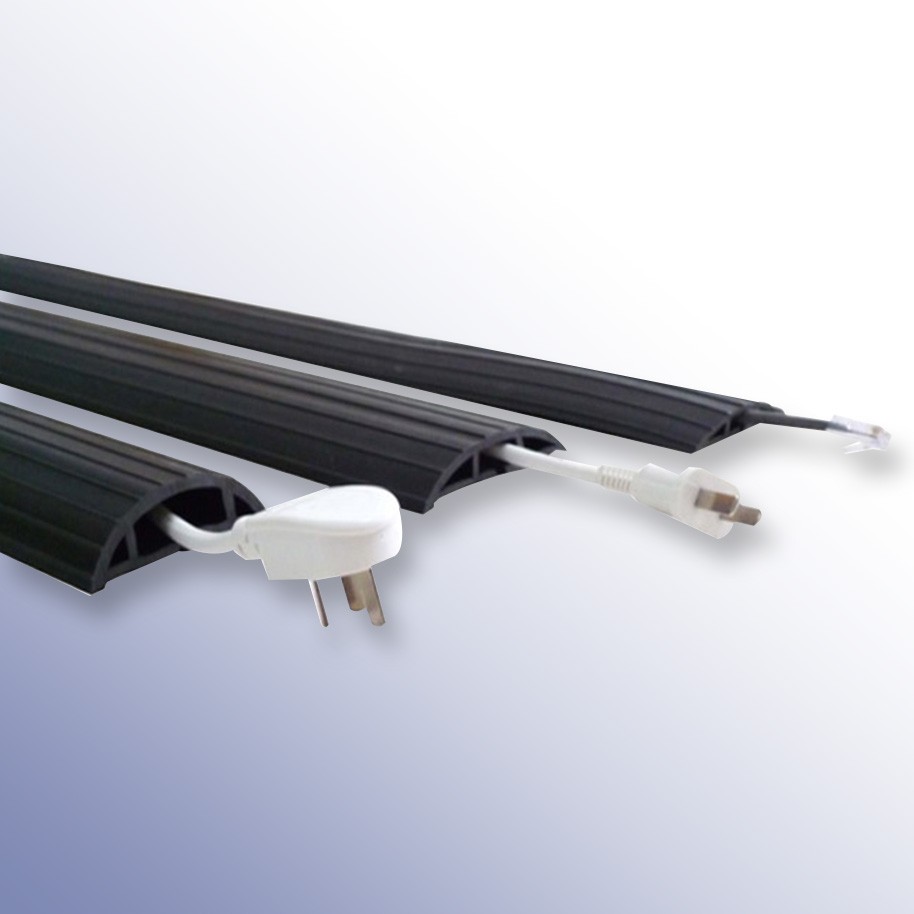
    Pedestrian Traffic Offices, exhibitions, festivals and public events Foot Traffic Cable Cover Pedestrians and light trolleys
    Light Vehicles Cars, service vehicles and delivery vans MCP Multi Cable Protector Light commercial traffic
    Heavy Commercial Traffic Forklifts, warehouse vehicles and plant machinery Polyurethane MPC Cable Protector Up to 40 tonnes depending on model
    Heavy Goods Vehicles Construction sites, utilities and infrastructure projects HGV Outdoor Cable Protector Up to 80 tonnes depending on model

    It is always recommended to choose a cable protector with a load rating that exceeds your expected traffic requirements. Underestimating vehicle loads is one of the most common causes of cable protector failure.

    Step 3: Consider How Long the Installation Will Be in Place

    The duration of the installation often determines the most suitable type of cable protector.

    Installation Type Typical Applications Recommended Features
    Temporary Installations Festivals, concerts, sporting events, exhibitions, film productions and emergency response situations Quick deployment, modular design, high visibility and easy repositioning
    Long-Term Installations Warehouses, manufacturing facilities, loading bays and utility installations Heavy-duty construction, high load capacity and long-term durability

    Temporary cable management is particularly important at events where large numbers of visitors may be walking across power cables, lighting cables, data lines and water hoses. In these environments, cable protectors help maintain safe access routes while protecting essential services.

    Step 4: Determine the Number and Size of Cable or Hoses

    Not all hoses carry the same materials, and the consequences of damage can vary significantly. When selecting a hose protector, consider both the hose itself and the medium being transported.

    Medium Potential Risk if Damaged Additional Considerations
    Chilled water or glycol Slips, loss of cooling, equipment damage Consider heavier-duty protection and leak response procedures
    Compressed air Hose whip, loss of service Protect against impact and crushing
    Hydraulic oil Slips and environmental contamination Robust protection and spill management
    Chemicals Injury and environmental risks Review COSHH requirements and risk assessments
    Hot water or steam Burns and scalding Protect against rupture and accidental contact

    For example, temporary chillers used during shutdowns or emergency cooling projects often require both power cables and glycol hoses to cross vehicle routes. In these situations, selecting a protector solely based on traffic loading may not be sufficient. The potential consequences of a damaged hose should also influence the level of protection chosen.

    Step 5: Consider Visibility and Access Route Clearance

    Cable protectors should improve safety, not create new hazards.

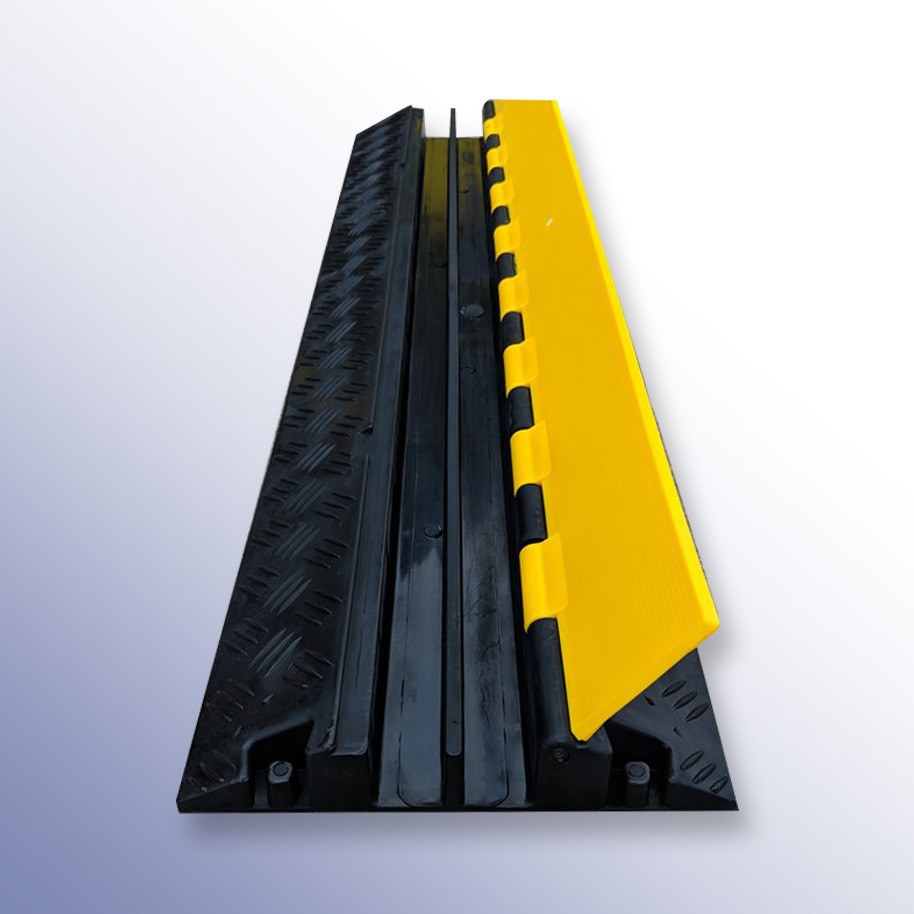
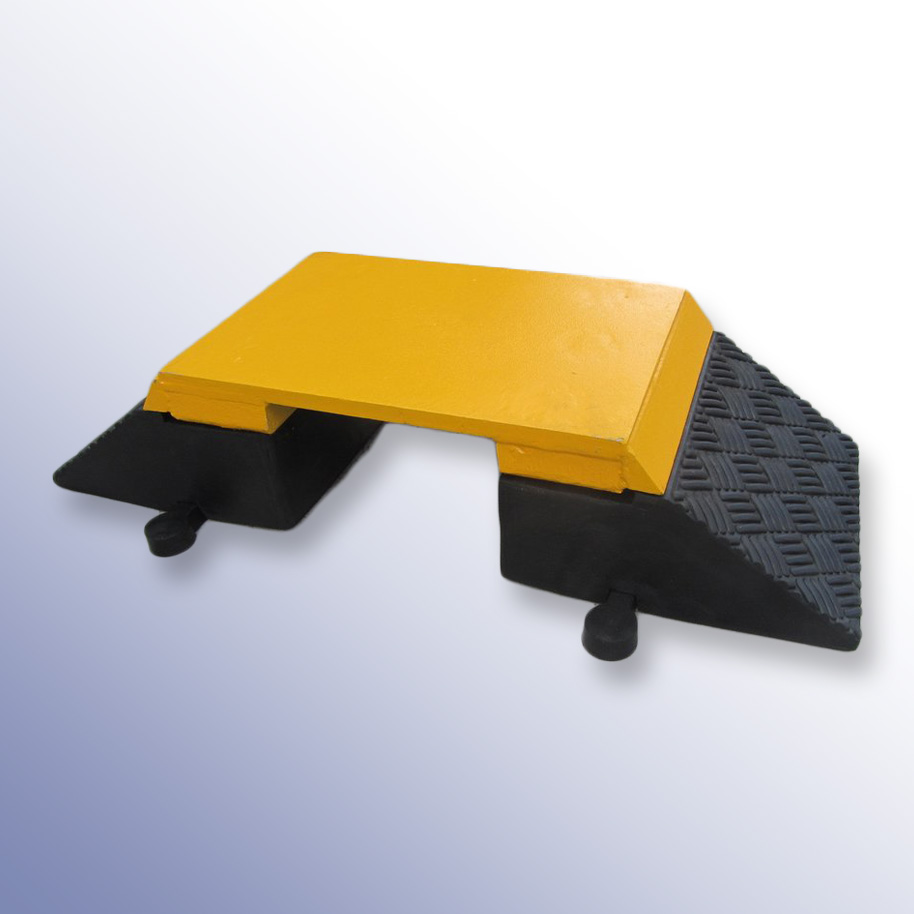
    High-visibility cable ramps are often the preferred choice in:Heavy Duty HGV Cable Ramp

    • Warehouses
    • Public spaces
    • Event venues
    • Construction sites
    • Emergency access routes

    The profile and positioning of the protector should also allow safe movement of pedestrians, wheelchairs, trolleys and vehicles wherever possible.

    Common Selection Mistakes to Avoid

    Some of the most common issues we encounter include:

    • Underestimating vehicle loads
    • Choosing channels that are too small
    • Using indoor products outdoors
    • Failing to consider installation duration
    • Selecting products with insufficient visibility

    Taking a few extra minutes to assess the environment and traffic requirements can significantly reduce the risk of accidents and premature product failure.

    Why Choose Polymax for Cable and Site Safety Solutions?

    At Polymax, we have experience helping customers across numerous industries, including manufacturing, warehousing, construction, utilities and live events.

    Whether you require a simple pedestrian cable cover for an exhibition stand or an 80-tonne-rated cable protector for a heavy-duty construction site, our team can help you identify the most suitable solution for your application.

    Many of our cable protectors and site safety products are available from stock and can be delivered quickly to help keep your project running safely and efficiently.

    Need Help Choosing the Right Cable Protector?

    By considering:

    • The environment
    • Traffic type and load requirements
    • Installation duration
    • Cable and hose size and capacity
    • Visibility and access requirements

    You can significantly improve site safety, protect valuable equipment and ensure compliance with health and safety obligations.

    If you're unsure which solution is right for your application, our team is always happy to help, contact us on +44(0) 1420 474 123 or E-mail us here.

  • What is Compression Set? Everything You Need to Know

    What is Compression Set?

    Compression set occurs when an elastomer undergoes permanent deformation and fails to fully recover its original shape after being subjected to prolonged compression. In sealing applications, this loss of elasticity can significantly reduce sealing performance and increase the risk of leakage.

    A common example is an O-ring that remains flattened after extended service. As the material loses its ability to rebound, the sealing force decreases, making compression set one of the leading causes of O-ring failure. Understanding what causes compression set and how to minimise it is essential when selecting seals for long-term reliability.

    How is Compression Set Measured?

    Compression set is a measure of an elastomer's ability to recover after being compressed for a specified period of time. It is commonly evaluated using the ASTM D395 testing standard, which measures the permanent deformation that remains after the compressive load has been removed.

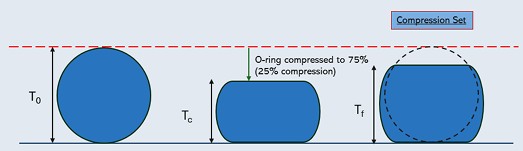
    During testing, the elastomer is compressed by a specified percentage, typically 25% of its original thickness for a defined period and temperature. Once the load is removed, the material is allowed to recover before its final thickness is measured.

    The result is expressed as the percentage of the original deformation that has not recovered. Lower compression set values indicate better elastic recovery and generally provide improved long-term sealing performance.

    Compression Set Formula for O-rings

    Showing the Compression set in O-rings

    Compression Set (%) = ((T₀ − Tᶠ) / (T₀ − Tc)) × 100 

    Where:

    • T₀ = Original O-ring cross-sectional thickness
    • Tᶠ = Final thickness after testing
    • Tc = Thickness under compression

    Causes of Compression Set

    Compression set can develop due to several factors, often acting together over time. Common causes include:

    Inadequate Heat Resistance

    Exposure to elevated temperatures can accelerate the breakdown of elastomer properties, reducing the material's ability to recover after compression. Selecting high-temperature materials such as FKM (Viton®) or silicone can help maintain elasticity in demanding environments.

    Poor Compression Set Performance

    Different elastomers exhibit varying resistance to permanent deformation. Materials with naturally lower compression set characteristics, such as EPDM and FKM, are often preferred for applications requiring long service life.

    Excessive O-ring Squeeze

    Applying too much compression during installation places additional stress on the elastomer and can accelerate permanent deformation. Recommended squeeze levels are typically:

    • Static seals: 15–30%
    • Dynamic seals: 8–16%

    Following established gland design guidelines helps optimise sealing performance while minimising compression set.

    Chemical Degradation

    Exposure to incompatible chemicals can alter the molecular structure of an elastomer, leading to hardening, softening, swelling, or permanent deformation. Ensuring material compatibility with the media being sealed is essential for long-term reliability.

    Factors Affecting Compression Set

    Shore Hardness (ShA)

    Shore hardness influences how readily an elastomer deforms under load. Softer materials, such as 50 ShA silicone, generally compress more easily and may exhibit higher compression set values. Harder materials, such as 75 ShA FKM, tend to resist deformation more effectively and often provide improved compression set performance.

    Selecting the correct hardness helps balance sealing effectiveness, installation requirements, and long-term durability.

    O-ring Size

    Correct O-ring sizing plays an important role in maintaining seal integrity and reducing compression set. The cross-sectional thickness and gland dimensions determine the amount of squeeze applied during installation.

    Thicker O-rings may experience greater compression, increasing the risk of permanent deformation. Conversely, O-rings that are too thin may not generate sufficient sealing force. Oversized O-rings can also experience excessive installation stress, which may affect service life.

    Compression Set Performance of Common O-rings Materials

    Different elastomer compounds exhibit varying levels of compression set resistance. While application requirements such as temperature, chemical compatibility, and hardness should always be considered, the table below provides a general comparison of common O-ring materials and their typical compression set performance.

    Material Compression Set Resistance Temperature Resistance Typical Applications
    Silicone (VMQ) Fair Excellent Food processing, medical devices, high-temperature environments
    NBR (Nitrile) Good Good Hydraulic systems, fuel systems, oil sealing applications
    EPDM Very Good Excellent Water systems, steam applications, outdoor environments
    FKM (Viton®) Excellent Excellent Chemical processing, fuels, high-temperature sealing applications


    Why is Compression Set Important When Selecting an O-ring?

    O-rings function by maintaining continuous contact between the sealing surfaces and the gland. To achieve this, the elastomer is compressed during installation, creating the sealing force required to prevent leakage.

    Over time, heat, pressure, and chemical exposure can alter the polymer structure of the material. As elasticity decreases, the O-ring becomes less capable of returning to its original shape, reducing the sealing force available within the assembly.

    For this reason, compression set should be considered alongside chemical compatibility, temperature resistance, and hardness during material selection. Choosing an elastomer with good compression set resistance helps prevent premature seal failure, reduce maintenance costs, and improve long-term system reliability.

    In critical applications such as hydraulic systems, chemical processing equipment, and industrial machinery, compression set is often one of the most important indicators of long-term sealing performance.


    Need Help Call +44 (0)1420 474123 or e-mail us. We're here to help you find the perfect solution for reliable, long-lasting sealing.

  • 12 Years of Partnership, Quality and Progress: Polymax Recognised by EUSGA

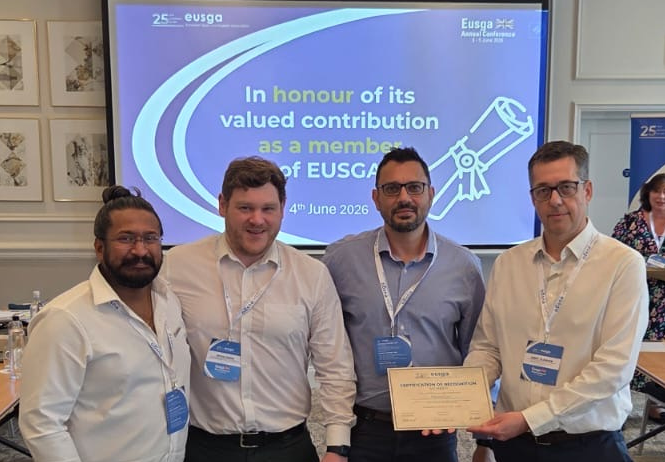
    The Polymax team was delighted to receive recognition at the recent annual conference of the European Sealing and Gasket Association (EUSGA), where we were presented with a certificate celebrating 12 years of membership.

    Being part of EUSGA reflects our ongoing commitment to quality, technical excellence, industry collaboration, and continuous improvement. For our customers, this means confidence in the products we supply, access to the latest industry knowledge, and a trusted partner dedicated to delivering reliable sealing solutions that meet the highest standards.

    We would like to thank EUSGA for this recognition and look forward to continuing to support our customers through innovation, expertise, and best practice across the industry.

  • Expanding Customer Solutions with Advanced CNC Rubber Cutting Technology

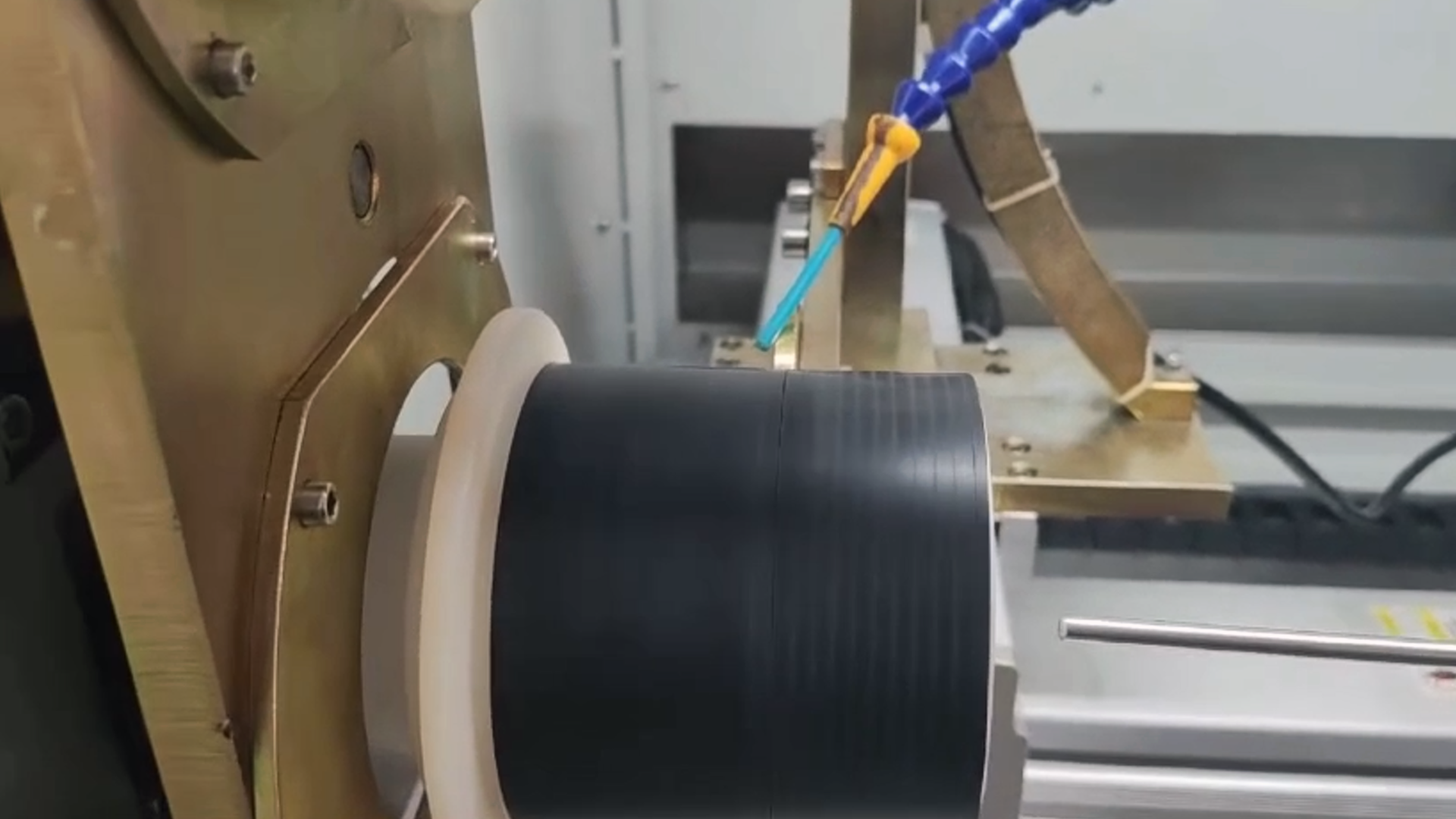
    CNC Washer Cutting MachineTo  enhance the range of precision manufacturing services we provide to our customers, Polymax have invested in the addition of a new CNC Rubber Tube Cutting Machine (Double Spindle). This investment strengthens our ability to supply high-quality flat washers, square rings, and custom rubber sealing components improving accuracy, consistency, and cost efficiency.

    By introducing this advanced cutting technology, we can now provide customers with:

    • More cost-effective production solutions compared to traditional single-piece moulding
    • Improved dimensional consistency with thickness accuracy up to ±0.05 mm
    • Virtually flash-free components with superior edge finish
    • Faster production turnaround for high-volume requirements
    • Reduced rejection rates and improved sealing performance
    • Greater repeatability through automated servo and PLC-controlled processes

    Improved Capacity

    The machine is capable of cutting rubber tubes ranging from 10 mm to 150 mm in diameter and is suitable for materials including EPDM, NBR, NR, and other elastomers commonly used in sealing applications.

    This capability is particularly valuable for customers in industries such as automotive, industrial sealing, infrastructure, and construction, where consistent quality and tight tolerances are essential.

    In addition to standard flat washers and square rings, the process also supports the efficient production of small rubber pipe sections and customised gasket components. By producing longer moulded pipes and precision-cutting them into finished parts, we can improve productivity while maintaining high levels of dimensional accuracy and finish quality.

    Improving Customer Performance

    The introduction of this technology allows us to better support customers facing challenges with:

    • Thickness variation
    • Poor edge quality
    • Inconsistent washer performance
    • Long lead times for bulk orders
    • High costs associated with conventional moulding methods

    This latest investment reflects our continued commitment to delivering innovative, high-quality, and value-driven rubber manufacturing solutions for our customers.

    To find out more contact our team of experts here, or call +44 (0) 1420 474 123.

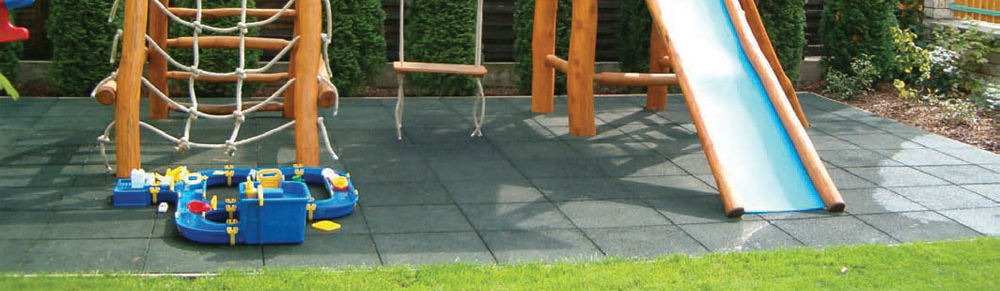
  • Safe by Design: Understanding the Legal Requirements for Playground and Play Area Matting

    Playgrounds and indoor play areas are designed to encourage activity, creativity, and social interaction. 

    However, playgrounds must be designed with safety in mind. One of the most important elements in reducing the risk of injury is the surface beneath equipment. Properly specified playground or play area matting can significantly reduce the severity of injuries caused by falls.

    For specifiers, contractors, schools, councils, and facilities managers, understanding the legal framework surrounding playground surfacing is essential. Failing to comply with relevant legislation and safety standards can increase the risk of injury and expose organisations to legal liability.

    This article explains the key legislation and safety standards affecting playground and play area matting in the UK, how a risk-based framework helps organisations remain compliant, and what to consider when selecting and maintaining appropriate surfacing. Czytaj dalej

  • How the Shore Hardness Scale Affects O-Ring Selection


    Choosing the right O-ring involves more than just size and material. One of the most critical but often overlooked factors is the material hardness. This indicates how soft or firm a rubber compound is, influencing how well the O-ring seals, resists pressure, and performs in real-world conditions.

    For most O-ring applications, Shore A hardness (abbreviated ShA or HA) is the primary scale used. However, understanding how different Shore scales work provides important context for making the best choice.

    What Is Shore Hardness?

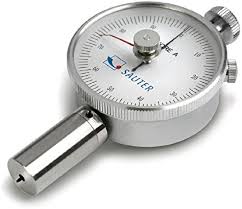
    Shore hardness is a measure of how resistant a material is to indentation, indicating how soft or hard it is on a standardised scale. It is determined using a device called a durometer, which applies a standardised force to a material and measures its resistance to indentation. The result is a numerical value that helps compare the hardness of different materials.

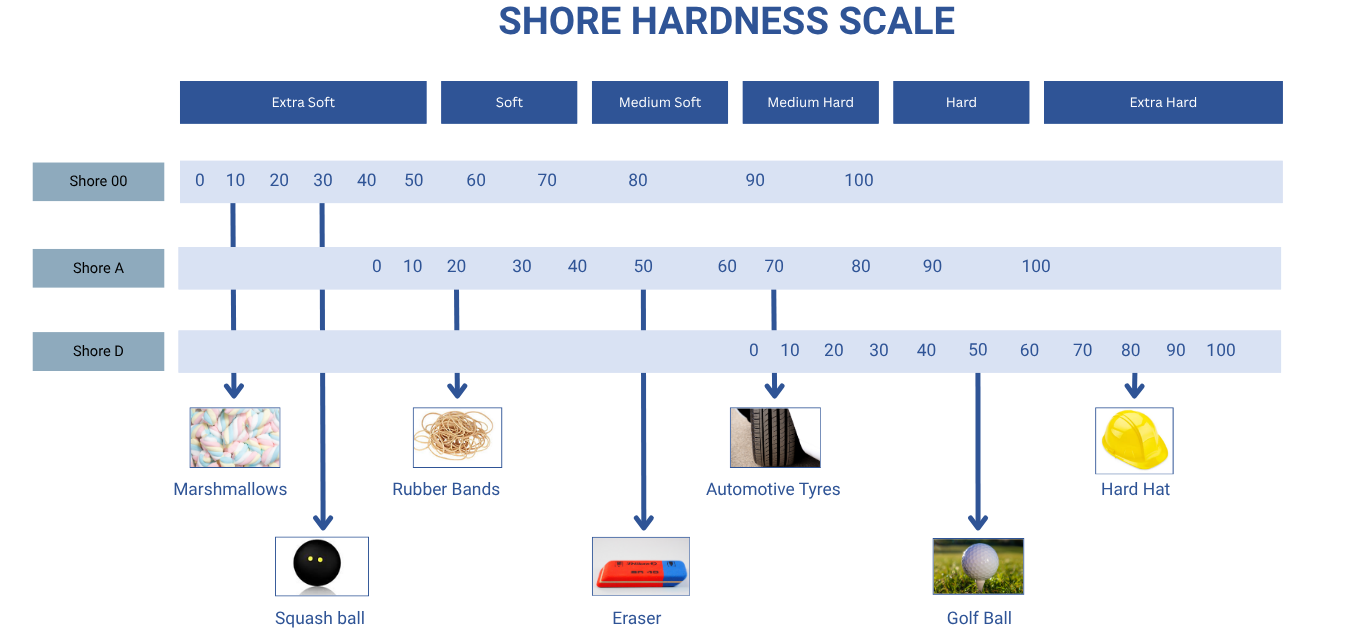
    Overview of Shore Hardness Scales

    There are several Shore scales, but the most commonly used for polymers and elastomers are:

    • Shore A (ShA or HA): Used for soft, flexible materials like rubber, silicone, and other elastomers. This is the standard scale for O-rings. The scale ranges from 0 (very soft) to 100 (very hard). For example, a 70 ShA O-ring offers a balance of flexibility and durability.
    • Shore D (ShD or HD): Designed for harder plastics such as nylon, polycarbonate, and rigid thermoplastics. Shore D is not used for standard rubber O-rings, but may be referenced for rigid back-up rings (PTFE) or non-elastomeric sealing components.
    • Shore 00: Less common in O-ring applications, Shore 00 is used for very soft gels or foams, like sponge rubber or soft silicone gels.

    Which Shore A Hardness Rating is Best for your Application

    The Shore A hardness rating of an O-ring has a direct impact on its ability to seal, resist deformation, and withstand pressure. As a guide what rating should you use for different applications.

    • Soft O-rings (40–60 ShA): Highly flexible, excellent for low-pressure applications or when sealing against rough or uneven surfaces. However, they may wear more quickly and be prone to extrusion under high pressure.
    • Medium O-rings (70 ShA): The most commonly used hardness for O-rings, striking a balance between elasticity and strength. Suitable for both dynamic and static sealing in hydraulics and pneumatics.
    • Hard O-rings (80–90 ShA): Best for high-pressure environments. These O-rings are more resistant to extrusion and abrasion but require smooth sealing surfaces and higher installation force.

    Reduce Cost and Downtime by Getting your Selection Right

    Understanding the Shore Hardness scale, especially Shore A (ShA) for elastomers, is essential for selecting the right O-ring. By matching the material hardness to your application's requirements, you can ensure a more reliable, longer-lasting seal that minimises downtime and maintenance.  To find out more contact our team of experts.

  • The Complete Guide to FDA, EC 1935/2004 & 3-A Compliance for Food-Contact Rubber and Silicone

    Ensuring food-contact O-rings, seals, gaskets, and silicone tubing are safe and compliant is essential for manufacturers, installers, and end-users operating in the United States, European Union, and global food-processing markets.

    Regulatory compliance helps:

    • Protect consumer health
    • Reduce contamination risk
    • Ensure export-ready certification
    • Support hygienic design standards in processing systems

    This guide compares the three most important frameworks for food-contact elastomers and sealing components:

    Achieving FDA and EC 1935 compliance is essential for manufacturers exporting to the U.S. and EU, while 3-A compliance ensures hygienic design in food and pharmaceutical systems worldwide.

    Key Differences Between FDA, EC 1935, and 3-A Sanitary Standards

    Aspect FDA 21 CFR (USA) EC 1935/2004 (EU) 3-A Sanitary Standards (3-A SSI)
    Governing Body U.S. FDA European Commission (enforced by national authorities) 3-A Sanitary Standards, Inc. (independent U.S. non-profit)
    Legal Structure Code of Federal Regulations (CFR) Framework regulation for all food-contact materials Independent hygienic design standards for equipment/components
    Compliance Model Ingredient whitelist (polymers & additives) Migration limits & traceability Hygienic design, cleanability, CIP/SIP compatibility
    Testing Focus Extractables & migration into food simulants Migration testing with EU-approved food simulants Cleanability, bacterial prevention, sanitary design
    Units / Measurement mg per square inch of material mg per kg of food N/A – design & cleanability criteria
    Documentation Required Manufacturer Declaration of Compliance (DoC), lab tests Declaration of Compliance (DoC), migration test results Manufacturer verification or third-party audit of design & materials
    Enforcement FDA inspections & enforcement National authorities in each EU member state Commercial/industry enforcement; not government-mandated
    Focus Area Chemical compliance & food safety Migration limits & traceability Hygienic operation, easy cleaning, contamination prevention
    Application O-rings, gaskets, seals, tubing, sheets All food-contact materials for EU market Equipment/components in hygienic processing (dairy, beverage, pharma)
    Regional Relevance Required for U.S. market Required for EU market Enhances marketability in North America & global sanitary industries

    Key Insight

    • FDA focuses on chemical safety and permitted substances
    • EU EC 1935/2004 focuses on migration limits and traceability across materials
    • 3-A SSI focuses on equipment design, cleanability, and hygienic performance

    Together, they define the global compliance landscape for food-contact sealing components.

    Steps to Achieve FDA 21 CFR Compliance

    FDA compliance for food-contact elastomers and plastics follows a structured process:

    1. Verify Approved Materials (Positive List Compliance)

    Materials must comply with FDA 21 CFR regulations, especially:

    • 21 CFR 177 (polymers used in food-contact applications)
    • Only listed additives, stabilisers, and resins may be used
    • New substances require a Food Contact Notification (FCN)

    2. Extraction & Migration Testing

    FDA requires lab testing to measure migration of substances into food simulants. EC 1935/2004 also requires migration testing but uses different simulants and measurement units.

    Aspect FDA 21 CFR (U.S.) EC 1935/2004 (EU)
    Testing Type Extractables & migration Migration only
    Food Simulants Distilled water (aqueous), n-hexane (fatty) Water, acidic, alcoholic, fatty, or solvent-based (depending on food type)
    Limits 20 mg/in² (aqueous), 175 mg/in² (fatty) Overall migration ~10 mg/kg; specific limits vary
    Units mg per square inch mg per kg of food
    Purpose Prevent leaching of harmful substances Ensure safe migration under intended use
    Testing Conditions Worst-case: high heat, long-term exposure Worst-case per EU test protocols

    3. Good Manufacturing Practices (GMP)

    • Clean, traceable production environments guarantee consistent quality and contamination prevention.
    • Essential for manufacturers and reassuring for installers and end-users.

    4. Declaration of Compliance (DoC)

    • A self-issued document summarising compliance, usually backed by independent lab reports.
    • Required for audits, inspections, and export documentation.

    Authority cue: A properly prepared DoC demonstrates regulatory compliance to FDA, EC, and 3-A standards, reinforcing credibility with customers and regulators.

    Selecting the Right O-Rings, Seals, and Tubing

    When specifying components for food-contact applications, consider:

    • Regulatory compliance: FDA & EC 1935 for chemical safety; 3-A SSI for hygienic design.
    • Material properties: Durometer/hardness, chemical compatibility, temperature resistance.
    • Documentation: Lab reports, DoC, audit-ready datasheets.
    • Installation suitability: CIP/SIP systems, hygienic operation, maintenance access.

    Compliance Comparison at a Glance

      • FDA: Focused on ingredient safety and extractable limits; critical for the U.S. market.
      • EC 1935/2004: Ensures migration limits, traceability, and safe food-contact materials for EU export.
      • 3-A SSI: Ensures hygienic design, cleanability, and bacterial prevention, supporting CIP/SIP systems.
      • Manufacturers exporting to U.S. and EU markets need both FDA and EC 1935 compliance.
      • Proper documentation and independent testing support audits, inspections, and global market access.

    Tip: Following these standards ensures high-quality, safe O-rings, gaskets, and tubing for food-contact applications worldwide.

    Expert Guidance and Contact

    Our team of compliance specialists can help you identify FDA, EC 1935, and 3-A compliant materials, Contact our team of Experts

  • How to Choose the Right Material for Gasket and Seals

    Selecting the correct gasket material is critical to preventing leaks, reducing downtime, and ensuring long-term system reliability. Whether in chemical processing, food production, or high-pressure systems, material choice directly impacts performance, safety, and cost.

    Choosing the right material starts with understanding the operational parameters under which the gasket will function. Choosing the right material ensures reliability, longevity, and safety.

    Step 1: Define Operating Conditions (External Environment)

    The first step in material selection is to clearly define the conditions in which the gasket or seal will operate. These external factors determine the baseline requirements for performance and durability.

    Key considerations include:

    • Temperature: Materials must withstand both the minimum and maximum operating temperatures. For example, graphite gaskets perform well in high-temperature environments, whereas elastomers are typically better suited to moderate ranges.
    • Pressure: Higher pressures require materials with sufficient compressive strength and structural integrity, such as metal gaskets or reinforced composites.
    • Chemical Exposure: The material must resist any fluids or gases it will contact. In chemically aggressive environments, fluoroelastomers such as Viton® are often preferred due to their superior resistance to fuels, oils, and solvents.

    Understanding these operating conditions helps narrow down suitable material groups before evaluating specific properties.

    Step 2: Evaluate Material Behaviour (Performance Properties)

    Once operating conditions are defined, the next step is to assess how candidate materials perform under those conditions. This focuses on the inherent properties that determine sealing effectiveness over time.

    • Key factors include:
      • Thermal Stability: The material must maintain its integrity, flexibility, and sealing capability across the full temperature range without hardening, cracking, or degrading.
      • Chemical Compatibility: Ensure the material will not swell, corrode, or chemically break down when exposed to process media.
      • Pressure Retention: The material must be capable of maintaining a reliable seal under system pressure without extrusion or permanent deformation.
      • Environmental Resistance: Consider exposure to moisture, UV radiation, abrasion, or outdoor conditions that may affect long-term performance.
      • Durability and Lifespan: Evaluate how the material performs under continuous operation, including resistance to wear, compression set, and ageing.

      This step ensures the selected material not only meets initial requirements but continues to perform reliably over time.

    Step 3: Consider Compliance and Industry Standards

    Many industries require seals and gaskets to comply with specific standards to ensure safety, reliability, and regulatory compliance. Key standards to consider include:

    • ASME B16.20: Governs metallic gaskets used in high-pressure piping applications.
    • PN Ratings (e.g., PN16, PN40): Define the nominal pressure a gasket or flange can withstand in metric piping systems.
    • FDA and EU Regulations: Ensure materials used in food, beverage, and pharmaceutical applications are safe and non-reactive.
    • DIN and EN Standards: Common in Europe, covering gasket dimensions, materials, and performance criteria.
    • API Standards (e.g., API 601, API 622): Relevant for the oil and gas industry, specifying gasket design, material, and leak performance.
    • NACE Standards: Address corrosion resistance requirements, especially for chemical and petroleum industries.

    Ensuring compliance with these standards helps guarantee that the selected gasket material not only meets operational requirements but also adheres to industry and regulatory mandates, reducing the risk of failures and legal or safety issues.

    Step 4: Evaluate Cost vs. Performance

    While it’s tempting to select the cheapest material, cost-effectiveness comes from balancing initial cost with longevity and reliability. A slightly more expensive gasket material may deliver a better whole life cost value, as it can reduce disruption, maintenance costs and downtime significantly.

    By following these steps, you can confidently select the ideal gasket material for your application, minimising risk and maximising efficiency.

    Key Considerations:

    • Assess temperature, pressure, and chemical exposure first 
    • Match the material properties to your application
    • Ensure compliance with industry standards
    • Balance cost with long-term performance

    The following comparison table evaluates common elastomeric, fibrous, and metallic materials, such as Nitrile (NBR), EPDM, Silicone, and PTFE against some  key criteria to help you identify the most cost-effective and reliable solution for your specific application.

    Material Temperature Range Pressure Tolerance Chemical Compatibility Key Advantages Common Applications
    Nitrile (NBR) -40°C to +120°C Low to moderate Good with oils, fuels, hydrocarbons; poor with ozone/UV Cost-effective, oil-resistant Automotive, fuel systems, hydraulic seals
    EPDM -50°C to +150°C Low to moderate Excellent with water, steam, mild acids; poor with oils Weather/ozone resistant, FDA grades available HVAC, water treatment, food-grade seals
    Silicone -60°C to +200°C Low to moderate Resistant to ozone, weathering; limited fuel/oil resistance Flexible at extreme temperatures Medical devices, food processing, ovens
    PTFE (Teflon) -200°C to +260°C Moderate Excellent chemical resistance, inert to most fluids Non-stick, FDA compliant, broad chemical use Chemical processing, pharma, food industry
    Graphite -200°C to +450°C (up to 3000°C in non-oxidizing atmospheres) High Excellent with acids, solvents, steam; oxidizes in air >450°C High-temp resistance, creep-resistant Power plants, refineries, exhaust systems
    Viton® (FKM) -20°C to +200°C Moderate Excellent with fuels, oils, solvents; poor with steam/amine Superior chemical and fuel resistance Aerospace, oil & gas, automotive
    Neoprene (CR) -40°C to +120°C Low to moderate Good with oils, ozone, weathering; limited chemical resistance Balanced performance, durable Refrigeration, marine, HVAC
    Cork -20°C to +120°C Low Moderate resistance to oils and fuels; poor with solvents Compressible, conformable, lightweight Automotive engines, electrical transformers
    Compressed Fibre (general) -50°C to +400°C Moderate to high Resistant to oils, water, steam, mild chemicals Economical, versatile sealing material General industry, pumps, compressors
    Aramid/NBR Compressed Fibre -50°C to +300°C High Excellent with oils, fuels, hydrocarbons, steam; limited with strong acids/alkalis Strong mechanical strength, creep resistant Oil & gas, petrochemical, chemical plants
    Metal (SS, Inconel, etc.) Up to +1000°C (material-dependent) Very high Excellent with most fluids, gases, and steam Handles extreme temp/pressure, reusable High-pressure pipelines, turbines, flanges
    Spiral Wound (Composite) -200°C to +1000°C Very high Depends on filler (graphite/PTFE/mica) and metal choice Versatile, robust under harsh conditions Petrochemical, refinery, nuclear


    Choosing the correct gasket material is not just a specification decision, it directly impacts system safety, maintenance frequency, and operational cost. By evaluating operating conditions, material properties, and compliance requirements, engineers can ensure reliable sealing performance across even the most demanding applications.

    For guidance and support Contact our team of experts, or call them on +44 (0) 1420 474 123.

Produkty 1 do 10 z 53

Cookie Notice.
This websites use cookies. By continuing to browse the site you are agreeing to our use of cookies.